
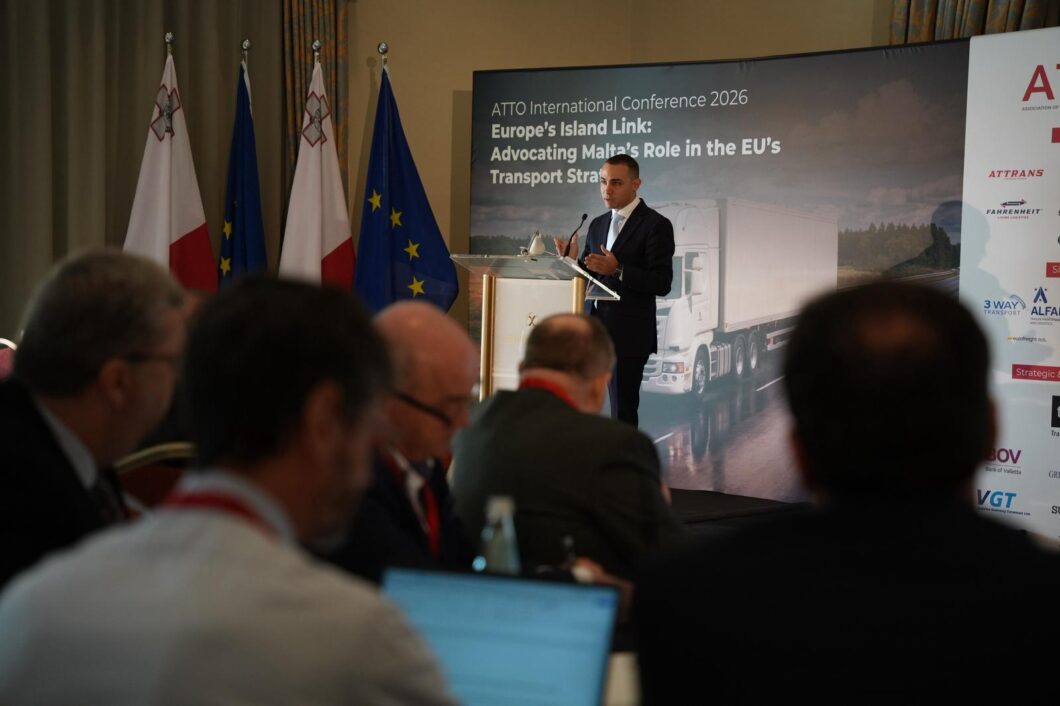
At the ATTO Conference, I made one central argument.
The European Union’s climate agenda must not only be ambitious. It must also work in practice for island economies like Malta.
What is Fit for 55 and Why It Matters
“Fit for 55” is the EU’s flagship climate package. Its objective is clear: reduce greenhouse gas emissions by at least 55 percent by 2030 compared to 1990 levels. It includes reforms to the EU Emissions Trading System, new rules for maritime and aviation, renewable energy targets and a range of decarbonisation measures.
The direction is right.
But the question we now face is different: are these measures designed in a way that reflects structural realities across all Member States?
For Malta, that question is critical.
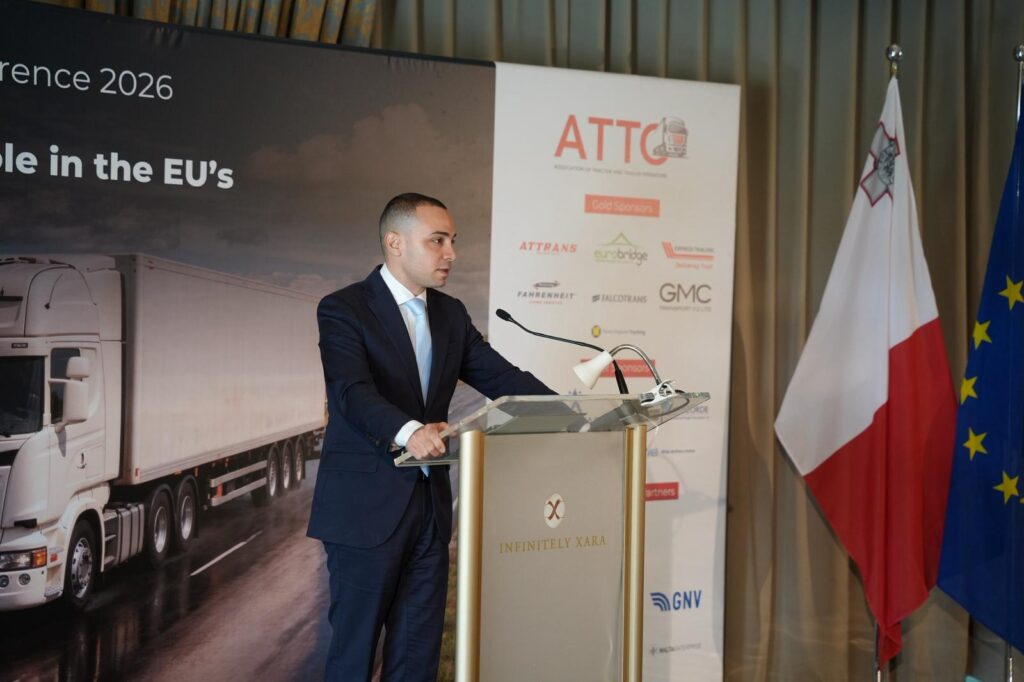
Maritime Freight Is Not One Sector Among Many
For larger countries, maritime transport may be one logistics option among several.
For Malta, it is the supply chain.
Every container. Every trailer. Every pallet. It starts at sea. 
The extension of the EU Emissions Trading System to maritime transport will change cost structures across the board. That is not speculation. It is a fact. 
For some Member States, this is an adjustment.
For Malta, it is structural.
Our intermodality is maritime based. A single maritime leg from Malta to Genoa is roughly one thousand kilometres. The equivalent of putting a truck on the road from Brussels to Barcelona. Except for us, that leg is not optional. It is the first leg of almost every supply chain. 
When carbon pricing hits that leg, it hits the entire economy.
That is why I have been pushing for realism in the upcoming ETS review. Decarbonisation, yes. But calibrated. Sequenced. And geographically aware. 
Turning Exposure Into Influence
This is not about ideology. It is about structural exposure.
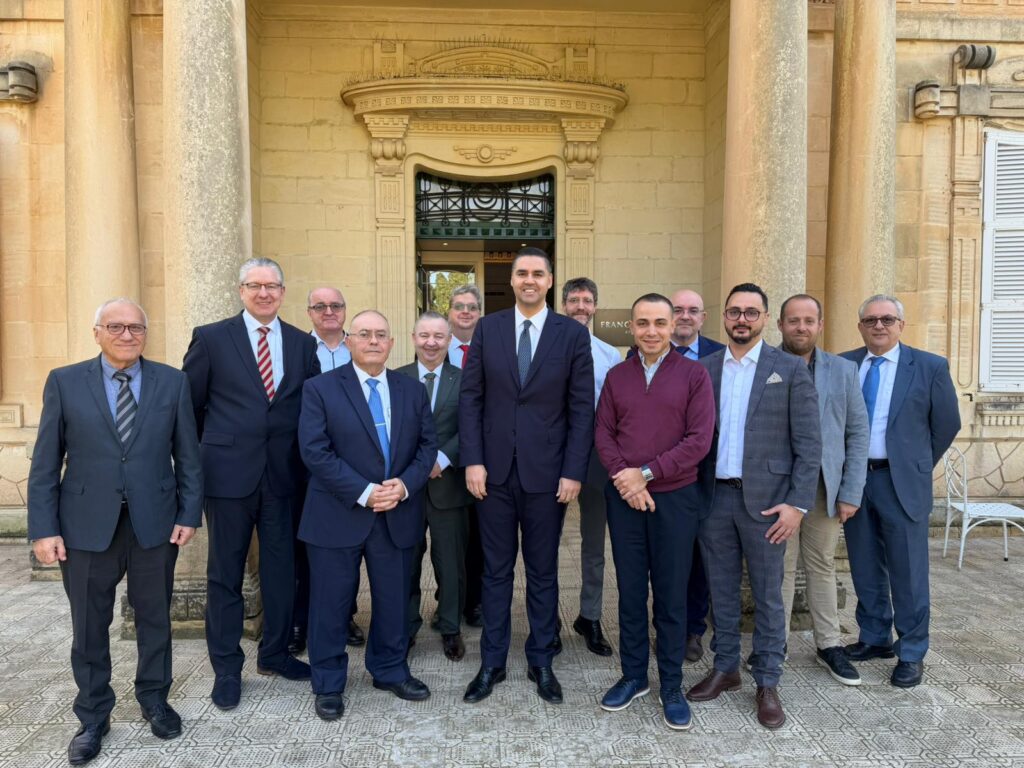
Early in my mandate, I brought the first Transport and Tourism Committee delegation to Malta and Gozo. Not for protocol. But to show colleagues what maritime dependency actually looks like. 
We stood on the quayside. We engaged with ATTO, port operators and freight forwarders. They saw the distance. They saw the double insularity of Gozo. They understood that modal shift for Malta starts and ends at sea. 
That visit changed the tone in committee. Because once you see it, you cannot ignore it.
On the revision of the Combined Transport Directive, there was a real risk that the proposal would simply disappear. Through sustained engagement with the Commission and pressure in committee, the coordinators took a clear decision to ask the Commission not to withdraw the revision. 
That is a concrete result.
Without that file, maritime based intermodality risks being sidelined again.
I have built strong working relations with the Commissioner and with the services in DG MOVE and DG CLIMA. I have formally invited the Commission to Malta to see implementation realities first hand. 
If Brussels wants compliance, it must understand context.
Transition Without Distortion
FuelEU Maritime moves in the right direction by setting emissions intensity targets. But the supply of alternative fuels remains limited. Infrastructure is uneven. Cost spreads are real. 
Mandates without infrastructure create distortion.
We learned that lesson in aviation. We should not repeat it at sea.
If we expect maritime operators to transition, we must ensure predictability. Clear timelines. Investment support. Port readiness. And smart use of ETS revenues.
Otherwise traffic shifts outside the EU. With no environmental gain. 
This is not about resisting transition.
It is about managing it intelligently.
Malta is a major flag state. A logistics hub. A Mediterranean connector. We are not asking for exemption. We are asking for proportion. 
The Real Question
Maritime decarbonisation must strengthen Europe’s resilience. Not weaken its island links. 
The real question is not how small we are.
The real question is how determined we are.
On maritime freight, Malta is determined.